



70% increase in Pharmacy First access in Scotland
Ross Ferguson,
29 May 2026 2 Min
2 Min

Ross Ferguson,
29 May 20262 Min
Ross Ferguson,
29 May 20262 Min


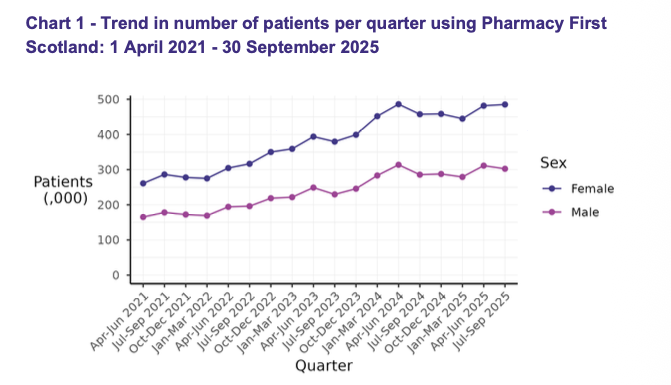
The number of people using Pharmacy First in Scotland at least once each quarter increased by 70% between 2021 (464,363) and 2025 (787,547), according to data released by Public Health Scotland (PHS) earlier this month.
The total number of people using the service was just under 2 million, representing 35% of the population of Scotland. This compares to a Company Chemists' Association (CCA) estimate that between April 2024 and March 2025, 2.5 million patients have been treated by the Pharmacy First service in England (representing around 4% of the population).
The PHS report also revealed that:
Adam Osprey, head of policy and development at CPS, said: "Community Pharmacy Scotland welcomes the latest release of Pharmacy First analysis from Public Health Scotland.
"It is clear to see that the service is an essential component of NHS primary care delivery, with over a third of the population choosing to access their local community pharmacy for support with acute, self-limiting conditions. Ensuring that the people of Scotland are directed to the right professional in the right setting is critical, and we continue to work with our Scottish Government colleagues on this.
"What must be recognised is the increased demand on the service - whilst Pharmacy First supports other parts of the healthcare system by keeping care as close to home as possible, for the sector to continue to carry out this role it must be invested in over the long term.
"This is particularly the case as we grow capability. Over half of Scotland's 1250 plus pharmacies now host an active independent prescriber with additional clinical skills training, ensuring that more consultations can be completed in the pharmacy setting, and improving the quality of clinical handover for those which require the input of another service."


